
Build an electricity budget for your own Blocknet mining setup from power, time and your tariff. A CPU model, mining hashrate or power-supply label alone cannot supply that budget. This guide separates the measurements and works through an illustrative calculation; it does not report new hardware measurements or a universal mining wattage.
What determines mining electricity use?
Energy use depends on the average power of the equipment you include and how long it runs. Measure a representative session, convert watts and hours into kWh, then apply your electricity rate. Keep whole-PC consumption separate from CPU or GPU sensor readings, and distinguish the full running cost from extra consumption on a computer you would already have running.
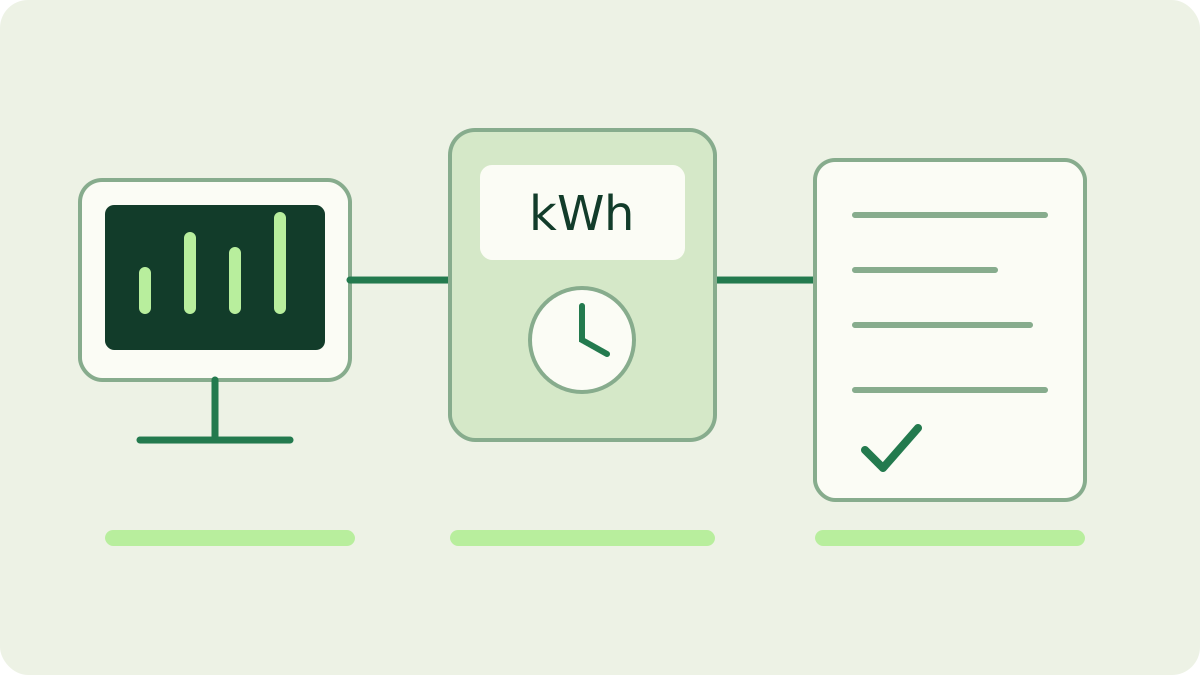
Start with watts, hours and kilowatt-hours
Watts describe power; kilowatt-hours describe energy used over time. For a stable average draw, energy in kWh equals watts multiplied by hours, divided by 1,000. Virginia Cooperative Extension explains this energy calculation. If the draw varies, an accumulated kWh reading over the full interval is more informative than one momentary watt reading.
Write down the measured equipment, start and finish times, and whether the interval includes startup, tuning or other desktop work. A daily estimate should include the modes that actually occur that day. Keep sleep, mining and ordinary desktop use separate when their power differs. The desktop mining guide helps define a repeatable everyday workload.
Choose a measurement that covers your equipment
A suitable plug-in energy meter can measure consumption at the computer’s supply, within the meter’s documented voltage and load ratings. Follow its manufacturer’s instructions. Record whether the screen, dock or other peripherals share that measurement. A power supply’s rated capacity is not a reading of what the PC currently draws; use measured energy for a measured-cost claim.
CPU and GPU tools cover particular components or domains. Linux powercap documentation, for example, identifies CPU package zones and subzones; adding overlapping domains can double-count energy. Package data does not establish whole-PC energy or separately unmeasured memory use. Preserve the sensor name and scope with any result, and treat an unavailable reading as missing data rather than zero.
How do you calculate a daily electricity cost?
Illustrative inputs only: assume a complete measured setup averages 150 W for 8 hours and electricity costs 0.20 currency units per kWh. Energy is 150 × 8 ÷ 1,000 = 1.2 kWh. The energy charge is 1.2 × 0.20 = 0.24 currency units for that session. These are invented round numbers, not a seine measurement or a current tariff.
Thirty identical sessions would use 36 kWh and cost 7.20 currency units at that same rate. Replace every input with your own observations. For time-of-use pricing, split the run at each rate change and sum the interval costs. Identify any bill components outside this calculation rather than treating an energy-only estimate as your complete household bill.
Separate full consumption from the extra mining load
If a computer runs solely to mine, its whole operating consumption belongs in the session budget. If it would already be running for another task, you can also estimate the additional mining consumption using matched measurements with mining off and on. Keep the foreground task, screen state, peripherals and measurement duration comparable.
For an illustrative comparison, suppose the same setup averages 60 W without mining and 150 W with mining. The difference is 90 W; over 8 hours that is 0.72 kWh, or 0.144 currency units at the example rate. The full mining-session consumption remains 1.2 kWh. The smaller number answers an incremental-use question and depends on the baseline actually being representative.
Compare settings using energy and completed work together
seine’s --cpu-profile efficiency guides CPU tuning toward a smaller thread count near its hashrate target. The name is not a measured-watt guarantee or a whole-computer power cap. Use the autotuning guide to understand the setting, then compare the same hardware, workload and measurement scope before attributing an energy difference to it.
A lower watt reading alone does not establish lower energy per unit of mining work. Compare average hashrate and energy over matched intervals, while checking accepted shares so an idle or disconnected miner is not mistaken for an improvement. Keep benchmark measurements separate from pool reward estimates; short reward samples also include block timing and share variation.
Keep a usable electricity record
Save the date, miner version, active devices, thread settings, meter or sensor scope, duration, energy and tariff. Mark values as measured, calculated or assumed. Repeat the comparison when the workload or hardware changes. This record lets you update a budget without turning a processor’s specification or an old result into a claim about today’s setup.
Combine your energy budget with the separate mining rewards calculator, preserving its hashrate and fee assumptions. If you prefer limited sessions, the part-time mining guide explains what happens to pool shares and balances between runs. Your schedule should follow your own usage and tariff; neither an electricity example nor a reward estimate promises a return.
Frequently asked questions
Does CPU package power show my whole mining electricity bill?
No. It describes a measured CPU domain, which may include other applications, and does not establish the computer’s wall-plug consumption. Use readings that cover the equipment you intend to budget, and record whether displays or other devices are included.
Does the efficiency profile enforce a watt limit?
No. seine’s efficiency profile influences CPU thread selection around a hashrate target. It does not measure your electricity tariff or impose a whole-PC watt limit. Compare energy over matched, representative sessions before claiming a saving.
How do I calculate daily mining electricity cost?
Multiply average power in watts by operating hours, divide by 1,000 to get kWh, then multiply by the applicable price per kWh. For changing prices or operating modes, calculate each interval separately and add the results.